
As a Pest Free organisation, Pest Free Howick aims to contribute to the goal of New Zealand becoming predator free by 2050.








PFHW Guide to Rat Trapping
Overview
One of our methods of achieving this is by offering a free rat trap to every household in the Howick Ward. We need one in every five households to be trapping to make a positive, long term impact for our native biodiversity.
You can do your part by signing up to our project here, or if you’re already signed up, the following guide will be perfect for you. When you sign up, you will be given both a trap device and a trapping tunnel.
This guide aims to answer all of the common questions about our free rat traps, and to teach our trappers how to operate them effectively, and above all, safely and humanely. If you did have any further questions please get in touch with your local conservation advisor (link to the halo’s page which will say which CA is right for their home address)
Is trapping for you?
The ultimate goal of our trapping project is to encourage native species to return to the Howick area by protecting them from pest animals. We consider this a necessary part of creating an environment where this can happen.
Perhaps if you were to start rat trapping you may see some native birds returning to your backyard?
If trapping isn’t something you’re comfortable with, however, we can also offer chew cards, which will not harm any animals. This is a method we use for tracking what pest animals you may have in your backyard – and with this information you can find other methods of discouraging pest animals from your property, such as waste management, or blocking entry points that rodents may use to get inside your house.
For more information on chew cards, have a look at this blog post.
Catch reporting
The one condition of taking one of Pest Free Howick’s free rat traps is that your catch data must be reported back to us. This is so we have a better idea of pest populations across the area which helps to determine future pest eradication efforts.
When you sign up to our project, you’ll be given the option of two catch reporting methods, email and CatchIT:
To email us your catches, you can just send them to catches.pestfreehowick@gmail.com. This is the most straight-forward reporting method – but there is a bit of information for you to remember in your emails.
What to include:
- A photo showing the full body.
- The date it was caught.
- The address it was caught at.
- The bait used.
We can give you a Trap Record sheet for you to record your catches each month and email this in once a month.
CatchIT
If you want to be a little more hands on, CatchIT is the option for you.
CatchIT is the software we use for collecting pest trapping data. Its database contains all of our active traps and trapping lines. If you choose this data reporting method, you’ll be able to directly update the catch data for the trap located at your address.
One of us will set up your address in the system and create an account for you, which you will receive login details for on the provided email address.
The website is quite intuitive, but if you have any trouble, some video tutorials are provided on CatchIT’s homepage. You’re also more than welcome to get in touch with any queries.
Equipment
In this section we’ll go over what YOU need, as well as some other suggestions.
Pest Free Howick is happy to provide any replacement equipment in the scenario that the trapping device or trapping tunnel is damaged or missing – but all other equipment will need to come from you.
Bait
Fortunately, rodents like eating many of the same things we do. Just regular peanut butter or mayonnaise usually does the trick – but we’ve also heard of success with other strongly scented or sweet foods.
Expired peanut butter and mayonnaise is also just as effective – it’s the scent that draws them in (and pests don’t adhere to food safety standards!).
Gloves
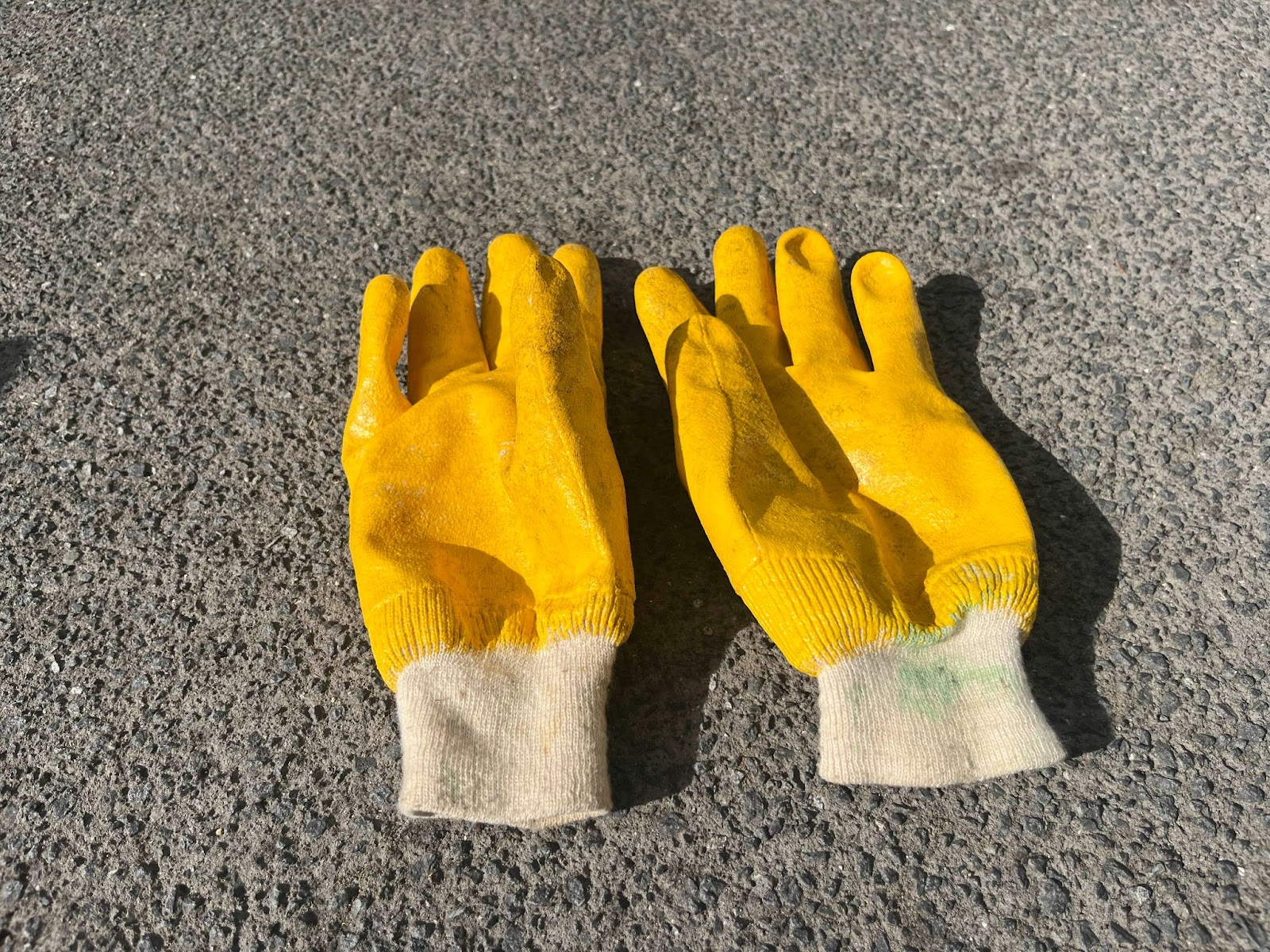
Rodents are very filthy and can carry all kinds of disease. For this reason it’s important that you wear gloves whenever handling your trap, and to wash your hands thoroughly afterward.
Wearing gloves also provides the double benefit of preventing your scent from reaching the trap – as human scents may make rodents uneasy of an unfamiliar fixture, such as a rat trap.
We recommend gloves of a similar thickness to dish gloves, as they’re unlikely to tear, and they provide some additional padding in the event the trap is mistakenly set off, while still allowing for enough dexterity to set the trap properly.
Other recommended equipment
Some other non-essential equipment that we recommend is:
- Screw/screwdriver – Securing the tunnel door with a screw can help prevent tampering, and ensures that the trap stays shut, reducing the risk of anything going missing. We would mostly recommend this if your trap is positioned somewhere accessible by the public.
- Zipties – Zipties can make sure your trap remains in the same position, especially after adverse weather. If your trap is in an area accessible to the public, this is also a good anti-theft measure.
- Wire brush – A wire brush is useful for keeping your trap clean, especially after a messy catch.
- Snail bait/ant sand – Bugs will love eating your bait too! Insecticides can help prolong the effective life of your bait by preventing anything else from getting to it before your rodent.
Choosing your rat trap
Pest Free Howick offers two types of traps for catching rodents; the T-rex and the Victor Professional. You will be asked to pick one when you sign up. This section will go over the differences between them so you can better decide for yourself.
All of our traps are kill traps that comply with animal welfare standards.
T-rex
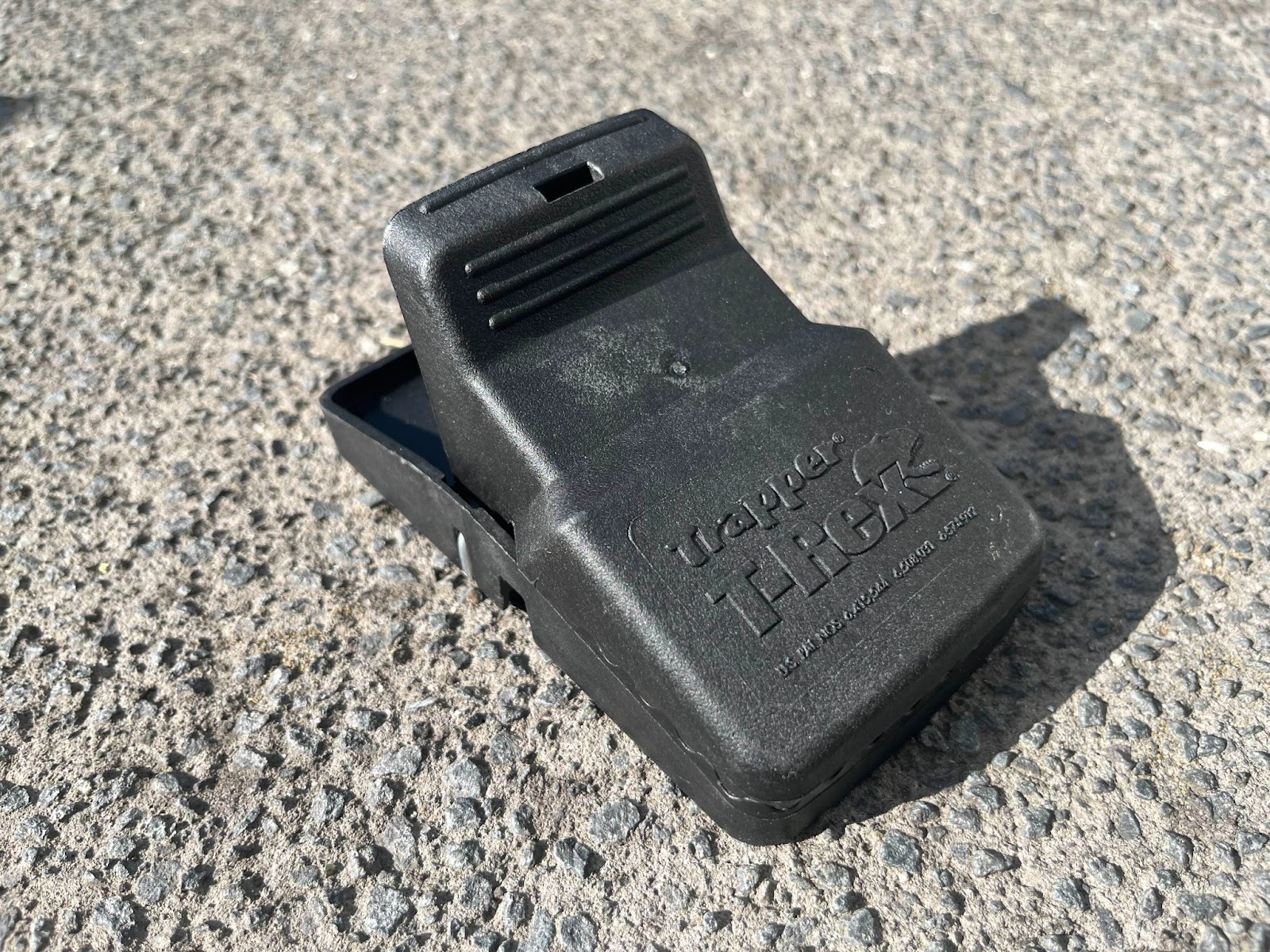
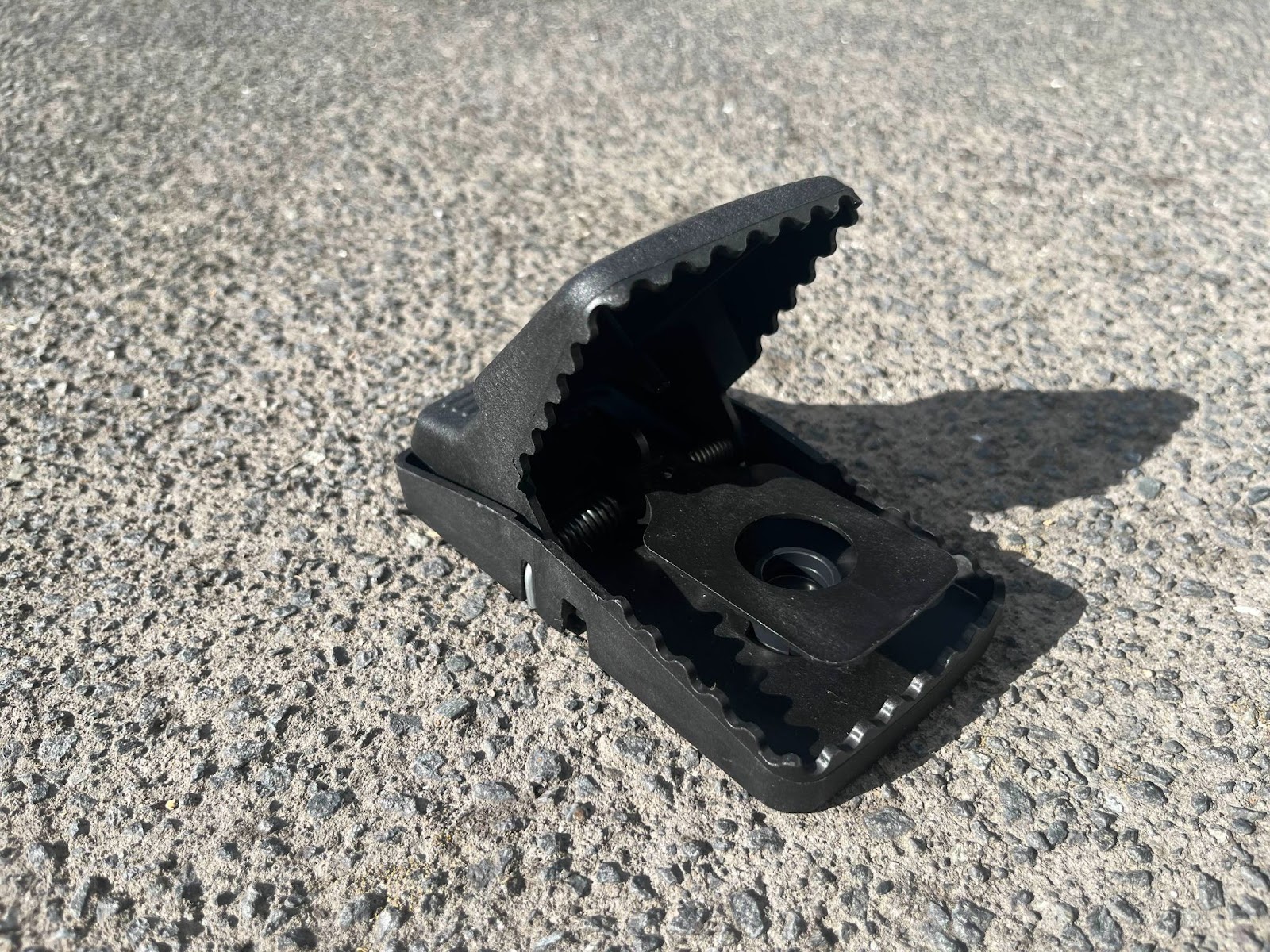
The T-rex is a very simple and easy to use trap, while still being effective. We recommend this trap to you if you aren’t super confident with trapping, or you would like to use something hat doesn’t require high levels of dexterity to use.
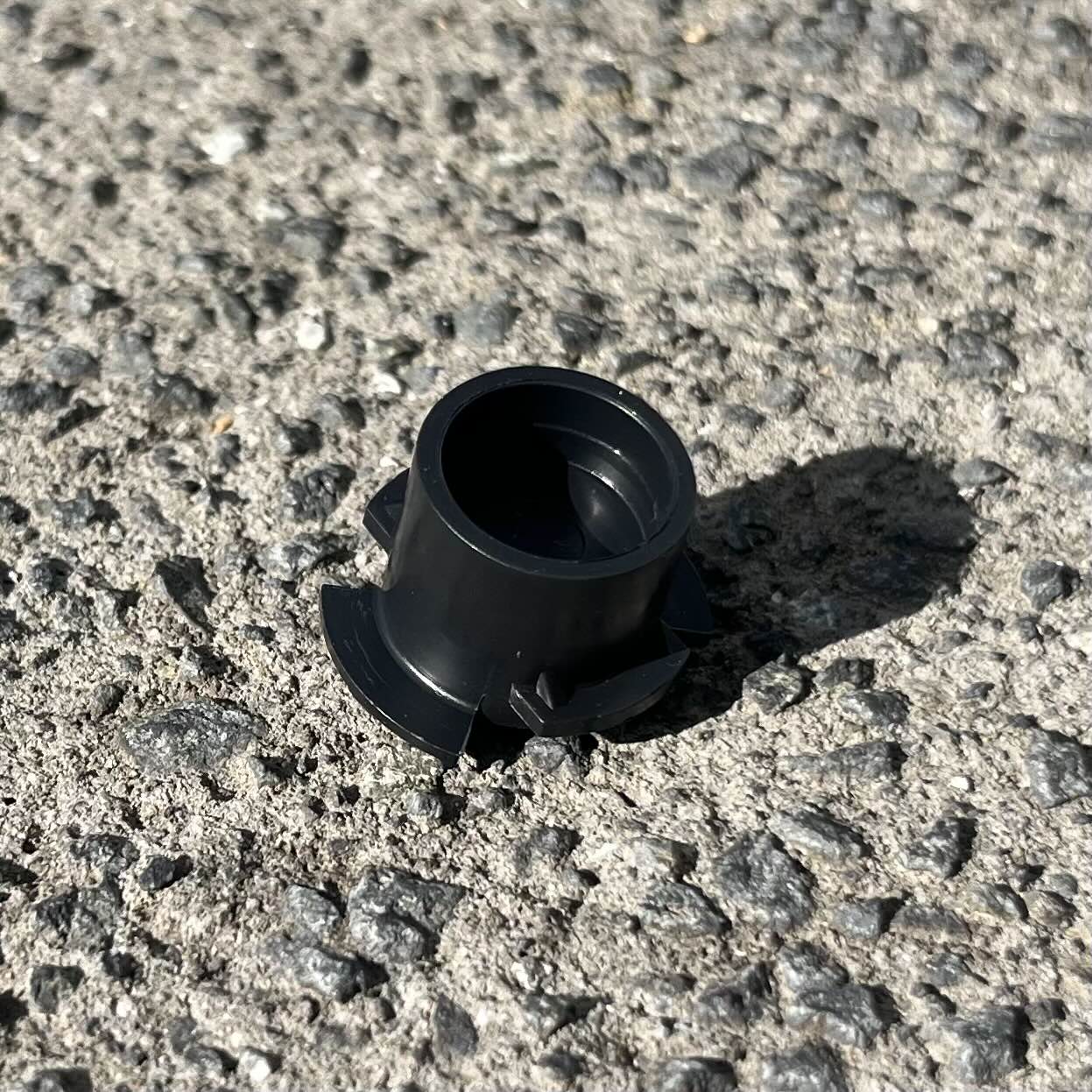
Bait can be inserted in a bait pod that screws into the bottom of the trap. This means your fingers will never have to be near the trigger while setting the trap, and as a result this is quite a safe option. Make sure not to fill higher than the bait pod, otherwise this may stick to the trigger and reduce the sensitivity of the trap.
The traps are made of plastic however, so like with the Professional, make sure not to set the trap out without anything inside to cushion the impact, or else the mechanism may break. To do this, simply press down on the trigger with one hand, while the other holds the trap firmly so it is unset slowly.
Victor Professional
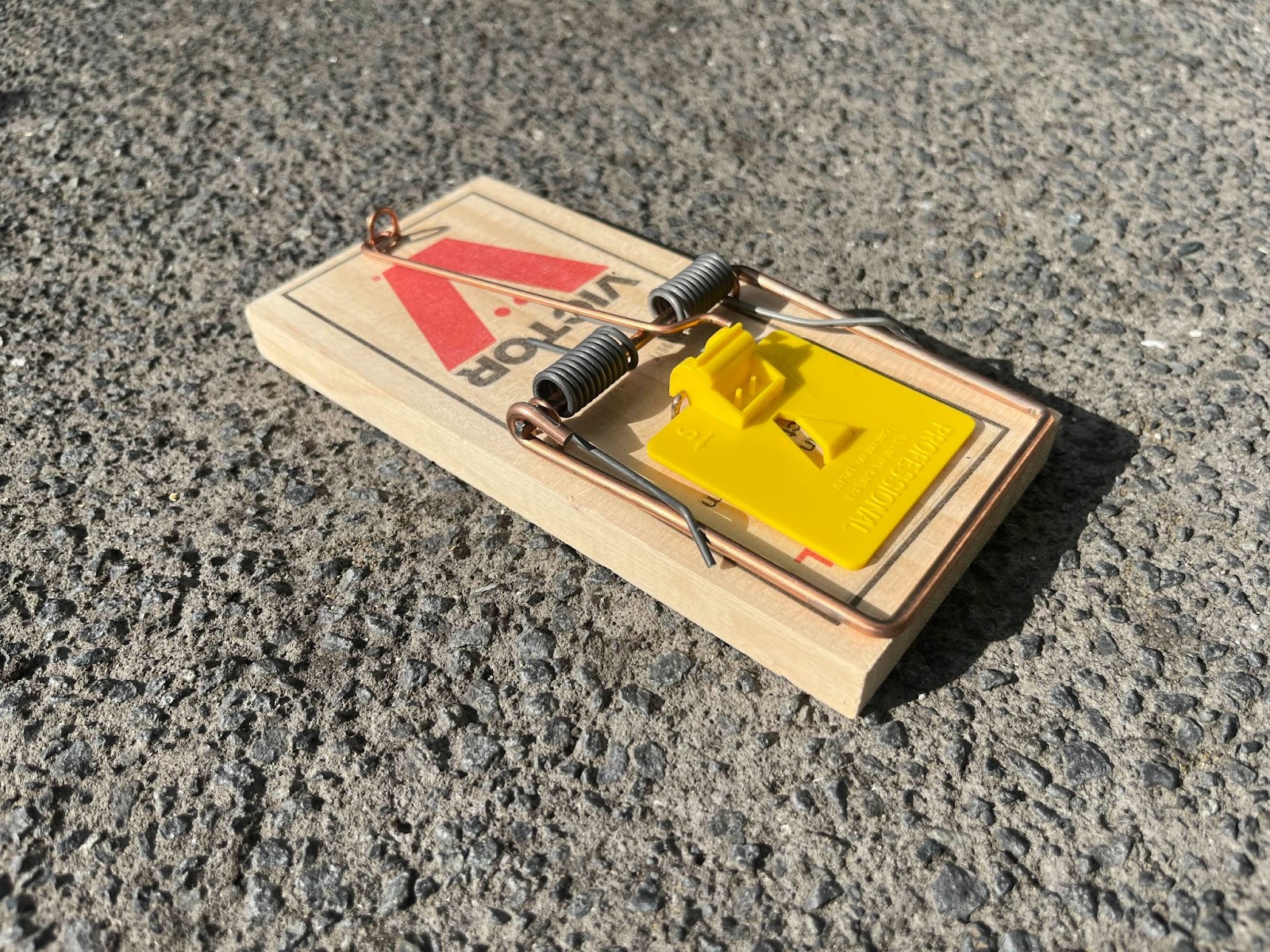
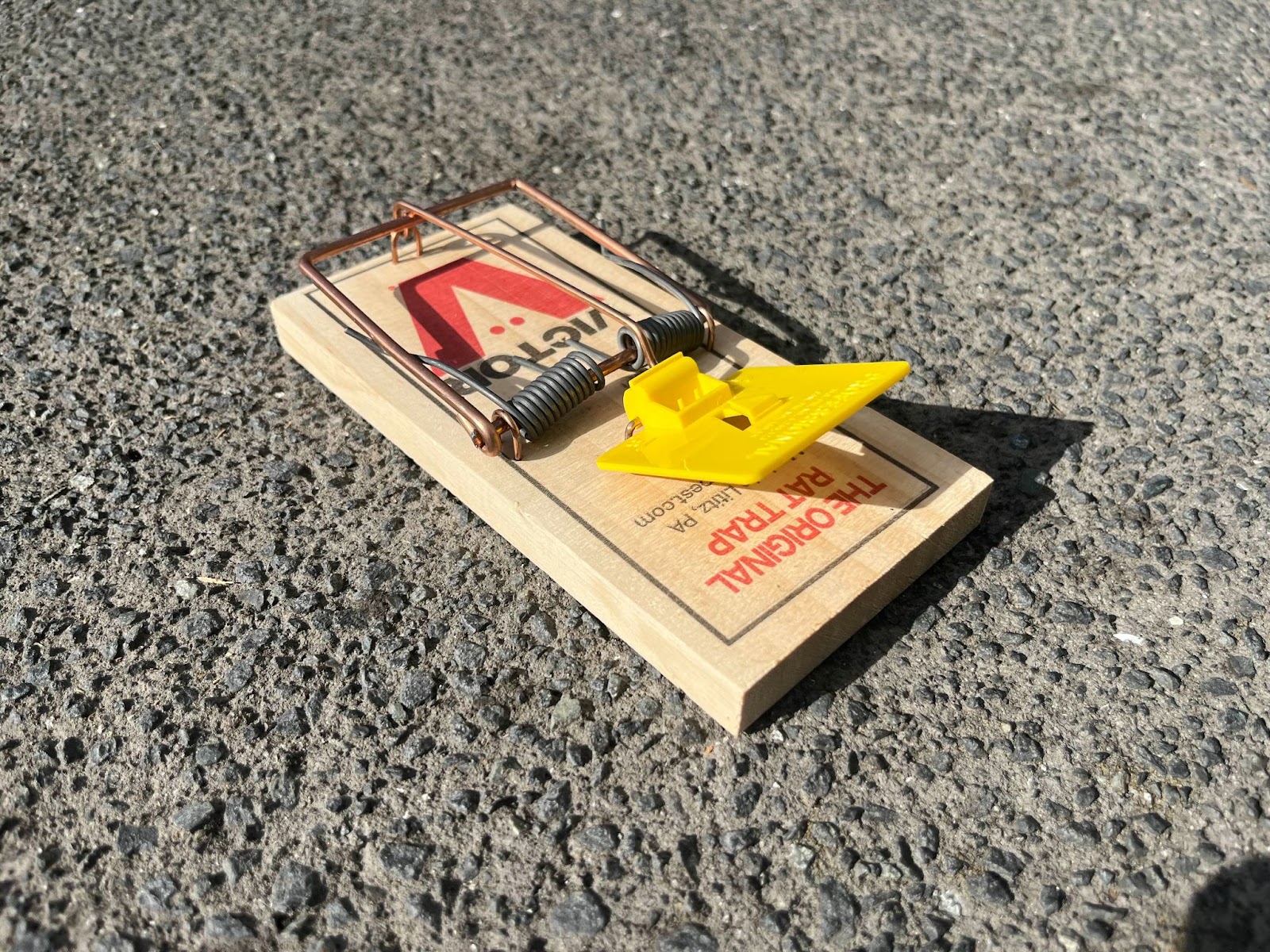
The Professional is the recommendation for our experienced trappers.
Victor professionals are very sensitive and fast traps, so we strongly advise you look at some tutorials if you aren’t already familiar with setting one, otherwise you could risk hurting yourself or damaging the trap mechanism.
A notch on the trap’s trigger allows the user to decide whether to make the mechanism faster, or less sensitive, as marked by ‘F’ and ‘S’
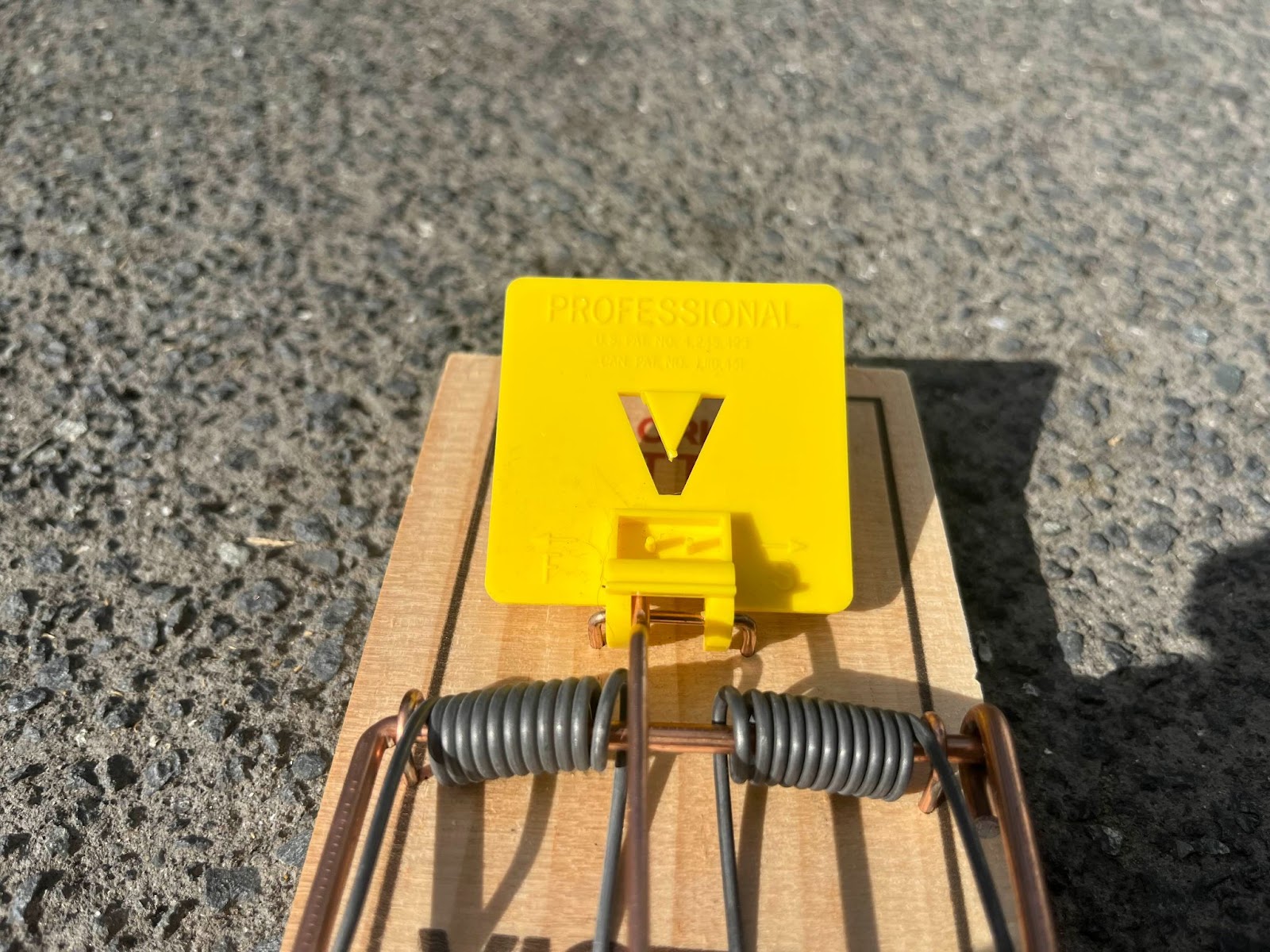
Like with the T-rex, the trap should never be set off without anything to cushion the impact, and as a result it’s important you unset the trap carefully when baiting it.
One of the more common ways people get hurt from the Professional is by trying to re-bait the trap while it’s still set. Don’t do this, save yourself a nasty bruise.
Moreover, having the trap set off without anything in it can damage the mechanism, resulting in the trap being less powerful, which can result in the trap failing to kill humanely.
Positioning your trap
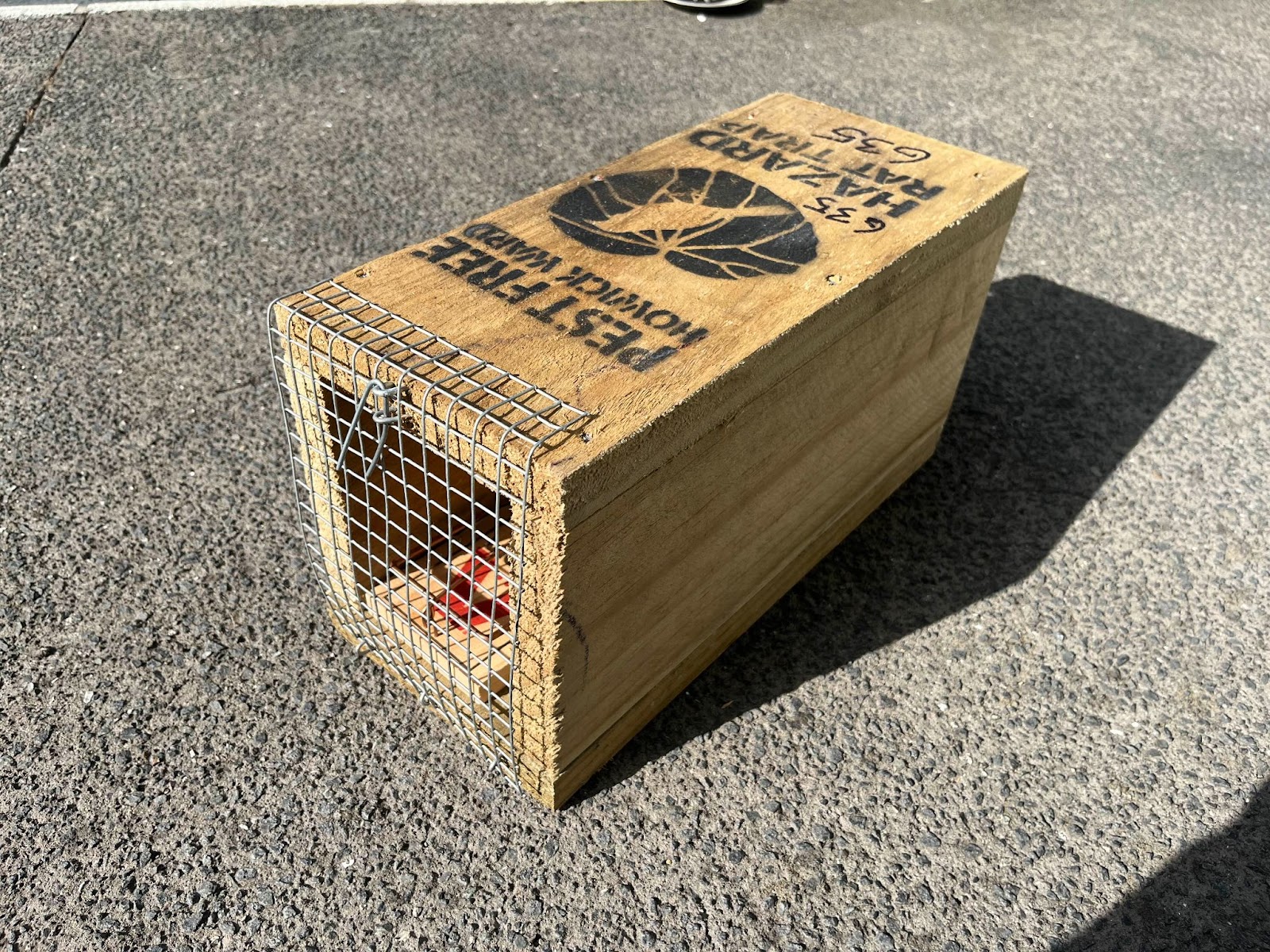
The positioning of your trap is a very important part of maximising your catches. This section will give you some advice on where to put your trap, and also how to position your device inside the tunnel.
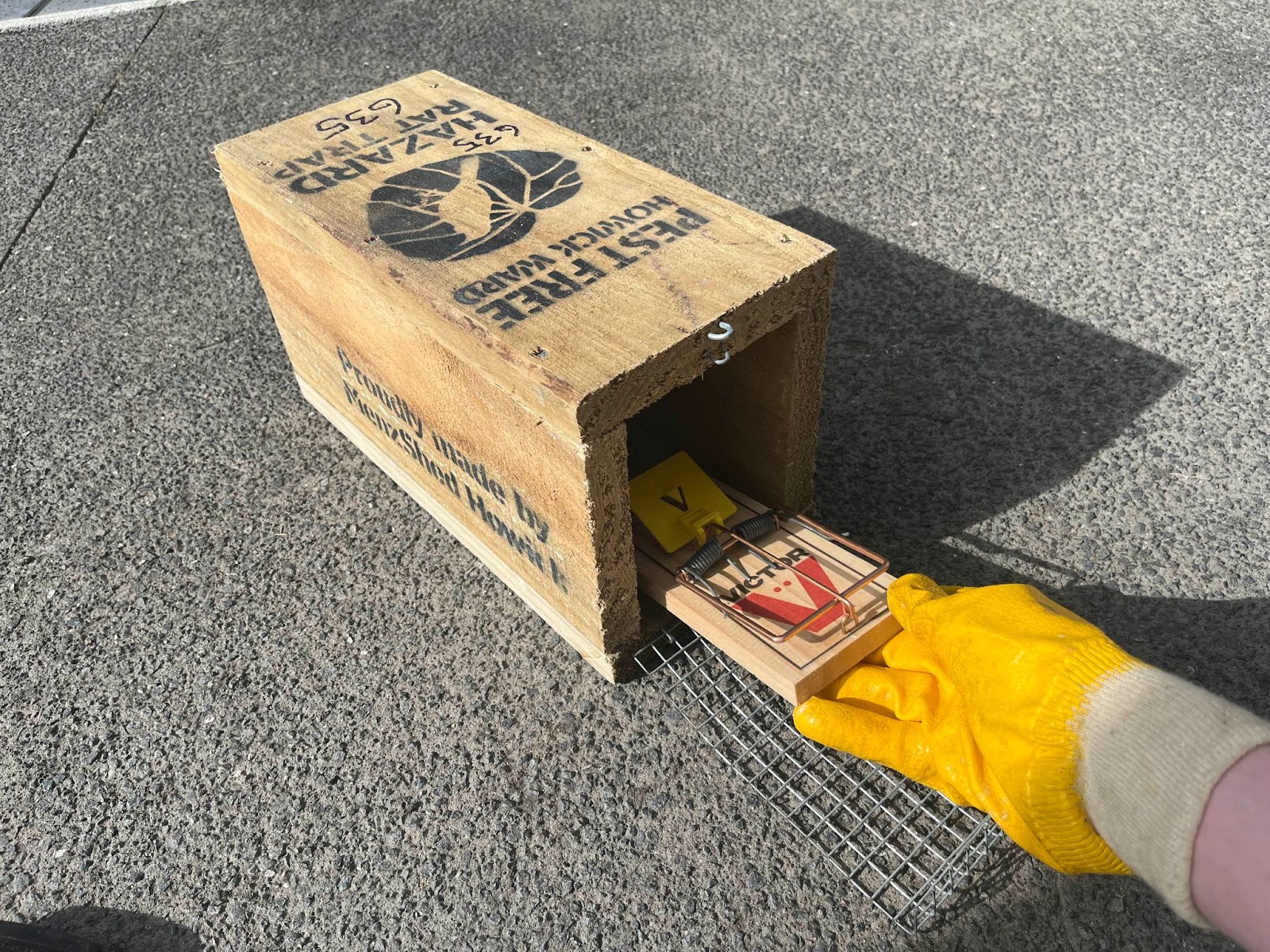
The wooden tunnel we supply with your rat trap is designed with an entrance only large enough for rodents. This is to prevent other unwanted animals from getting in and being hurt. Because of this it’s important that if placed outdoors, the trap device remains inside the tunnel whenever it is set.
If you are placing your trap indoors (i.e. in your roof), and you’re certain it’s out of the way of other animals or people, you will not need to use a wooden tunnel.
Positioning the device
When setting your trap, always make sure the device is pointed toward the entrance. This is the side with the hole in the wire mesh.
Position it as close as possible to the mesh door you use to access the trap. As mentioned in the equipment section, it can help to add a screw to the mesh door to prevent it from opening prematurely.
Always set your trap before placing it inside the trap.
Positioning the tunnel
Here are some tips on how you might position your wooden tunnel:
- Keep both ends unobstructed
The wooden tunnels are designed with wire mesh on both ends to give the impression to any rodents that they are able to pass straight through. As a result, it’s important that you make sure neither end of the tunnel is obstructed to keep up this impression. - Place your tunnel along a wall or fence line
Rodents love running along surfaces such as these, so traps placed alongside walls and fences generally see some success, and the mesh on either end helps the trap blend into these environments. - Make sure the tunnel is level
If your tunnel isn’t positioned on flat ground and it wobbles, this can scare off any potential customers. Placing stones or dirt under the tunnel can help stabilise it. - Place the trap near where rodents have been seen previously
It’s as simple as it sounds; rodents will return to places where they have successfully found food before. If you have an infestation indoors, it can help to place your trap near entrances you believe rodents have been using to get inside.
When you get a catch
Disposing of a dead rodent
A dead rodent can be quite nasty to deal with.
You should always be wearing gloves when handling a rat trap, regardless of if there’s a catch or not.
Luckily, even with gloves on, you’ll have to touch your catches very little, if at all.
If you keep the catch inside the trap as it was caught, you can just hold it with the device, and simply release it when you have a more suitable location to put it.
Generally, we advise you to put anything you catch in a plastic bag and leave it in the general waste bin.
Alternatively though, you could bury it in your garden, or, if you have a large enough property, find a secluded place to leave it where no dogs or people could tamper with it.
Disposing of a hedgehog
Occasionally, these traps will also catch hedgehogs. Hedgehogs are also considered invasive pests in New Zealand, but when caught, they can get quite stuck and/or messy.
When bagging a hedgehog, it’s advisable to use at least two layers of bags to account for the sharp quills.
Cleaning your trap
Occasionally, catches can get quite messy. This is especially the case if the trap has been unchecked for a while.
The scent of a dead rodent can put off others from visiting in the future.
A wire brush can be helpful for cleaning out your trap after catches. Also, if possible, hosing the trap down can be helpful. Make sure to wash all equipment used to clean your trap, and not to use any kitchen implements.
If the smell is particularly ungainly, it can be helpful to leave both the trap and tunnel to air out once the catch has been removed. This can also be helpful if there are maggots in the trap.
I’m not getting any catches
Out of luck with your traps? Here’s some further tips that can help you if you haven’t been getting catches
- Change the bait
Sometimes rodents can quite literally be bored by the bait you’re using. Switching up the type of bait can keep them enticed! - Replace your bait
Your bait may be getting old. It can help to re-bait if you haven’t had any catches in a while. This is especially true if it has been raining and the bait is wet. - Leave the trap unset
Your lack of interest could be due to rodents being unsure about the trap – they often are about unfamiliar fixtures. If you leave bait in your trap/tunnel without setting it, this can help ease them into it. - Relocate your trap
It could be true that there’s no more interest in the particular location you’ve placed your trap, or the rodents have figured out it’s unsafe. Relocating can help with this. - Make sure your tunnel is positioned properly
See the section on tunnel positioning. An improperly positioned tunnel can ward off any potential customers. - You might have caught your rodent!
This is the outcome we hope for, but the chances are that there are still rodents to be caught. If you believe you have caught everything there is to be caught, you’re more than welcome to get into contact and return it.
I’m not getting any catches
Having possum or mustelid problems? Unfortunately Pest Free Howick doesn’t offer traps for these pests, you can have a free trap loaned from our partner group, Trap Library East Auckland.

© Copyright 2024 - PEST FREE HOWICK WARD
A Howick Local Board funded project