
Many Aucklanders will be familiar with the enormous flocks of kuaka that grace our shores every year. Aside from seabirds, these migratory shorebirds undergo the longest nonstop flight of any bird in the world. Each year kuaka will leave their Northern Hemisphere breeding grounds in Alaska and Siberia, flying for 8-9 days without stopping. They arrive in New Zealand from early September. In Auckland, the birds will make the most of low tide foraging conditions by alternating between the Manukau and Waitemata Harbours. Kuaka forage on polychaetes (marine worms), crustaceans, and small bivalves. Once they have finished refuelling in New Zealand, kuaka migrate to the northern hemisphere in early March.








Kuaka/Bar-tailed Godwit
Conservation status: At Risk - Declining
The population of kuaka in New Zealand is thought to number around 75,000 individuals. However, the population continues to decline at a rate of approximately 2% each year. Kuaka face a range of threats, many of which are on a global scale. Their staging grounds in the Yellow Sea are under increasing pressure from development and pollution. Climate change will likely affect numerous aspects of their annual breeding and foraging cycles. In New Zealand, we can help the kuaka by ensuring that their tidal foraging grounds remain intact. We can also reduce human-induced disturbances while they refuel for their long journeys.
(Information adapted from New Zealand Birds Online)
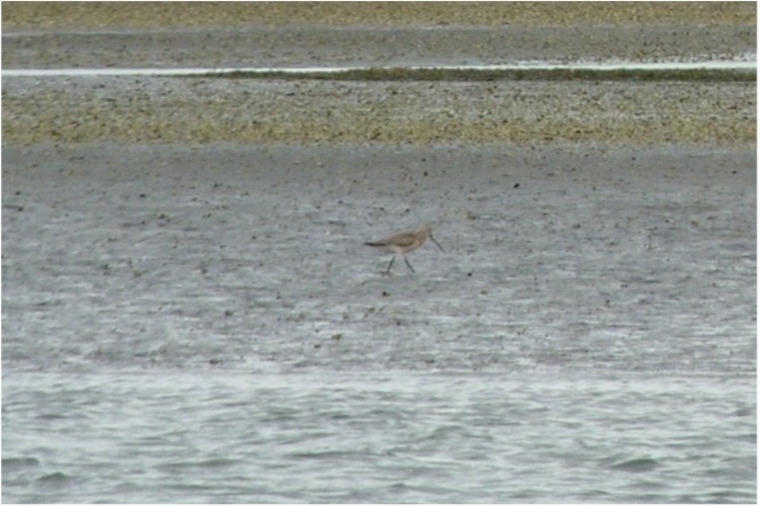
In the Howick Ward, kuaka forage in large numbers on the mudflats that extend from Clifton Road, Whitford (opposite the channel at Shelly Beach), and in smaller numbers at other local beaches and estuaries.
IMAGE: A kuaka foraging across the channel from Shelly Beach (Credit: Ethan McCormick)

© Copyright 2024 - PEST FREE HOWICK WARD
A Howick Local Board funded project